
What Is Neurological Rehabilitation (And How Is It Different From Physical Therapy)?

CT Junction Brain & Spine • May 12, 2026

Understanding the Difference Between Neurological Rehab and Physical Therapy

While traditional physical therapy focuses on muscles, joints, and movement, neurological rehabilitation focuses on how the brain processes information.


Physical therapy is typically used to treat:


  • Muscle strains
  • Joint injuries
  • Post-surgical recovery
  • Movement limitations


Neurological rehabilitation, on the other hand, addresses dysfunction in the nervous system, particularly after conditions such as concussions.


This includes:


  • Visual processing
  • Balance and coordination
  • Cognitive function
  • Sensory integration


Because concussions primarily affect the brain, neurological rehabilitation is often a more appropriate and effective approach for treating lingering symptoms.

Why Brain-Based Therapy Requires Consistency

The brain adapts through repetition. In order to restore proper function, it must be consistently exposed to the right type of stimulation and training.


Unlike traditional physical therapy, neurological rehabilitation often requires:


  • Daily or near-daily exercises
  • Repetitive, targeted training
  • A higher frequency of sessions


Consistency allows the brain to:


  • Strengthen neural pathways
  • Improve communication between systems
  • Become more efficient in processing information


Without repetition, improvements may be temporary. With consistent training, however, long-term changes can be achieved.

What to Expect During a Neurological Evaluation

At CT Junction Brain & Spine, the evaluation process is designed to identify the exact source of a patient’s symptoms.

Rather than relying on generalized treatment, providers use a data-driven approach that may include:


  • Balance and stability assessments
  • Eye movement and tracking evaluations
  • Reaction time testing
  • Cognitive and neurological screening


This comprehensive evaluation allows clinicians to pinpoint which systems are not functioning properly and develop a targeted treatment plan.

A Personalized Approach to Recovery

No two concussions are the same, which is why treatment must be individualized.


At CT Junction Brain & Spine, each patient receives a customized plan based on their specific findings. The focus is on addressing the root cause of symptoms rather than simply managing them.


Treatment plans may include:


  • Vision and vestibular therapy
  • Cognitive and reaction training
  • Neurological retraining exercises


Patients are also provided with tools and strategies to maintain improvements outside of the clinic, ensuring long-term success.

frequently asked questions

  • Is neurological rehabilitation more effective than physical therapy for concussions?

    Yes. Because concussions primarily affect the brain, neurological rehabilitation is often more targeted and effective.

  • How often will I need treatment?

    Frequency varies, but consistent and repeated sessions are typically recommended for optimal results.

  • Is neurological rehabilitation covered by insurance?

    Yes. CT Junction Brain & Spine accepts most major insurance plans.

Woman holding her head with eyes closed, showing pain or stress against a gray background
By CT Junction Brain & Spine May 12, 2026
Understanding Overstimulation After a Concussion
Man holding his temples with eyes shut, grimacing outdoors on a sunny day
By CT Junction Brain & Spine May 12, 2026
Learn why concussion symptoms come and go instead of staying consistent. Discover common triggers, sensory overload, and how neurological rehab can help stabilize recovery.
Hands cradling a pregnant belly, with a blue shirt and wristwatch visible
By CT Junction Brain & Spine May 12, 2026
Struggling in crowds after a concussion? Learn why busy environments trigger dizziness and how vestibular and neurological rehab can help improve sensory processing.
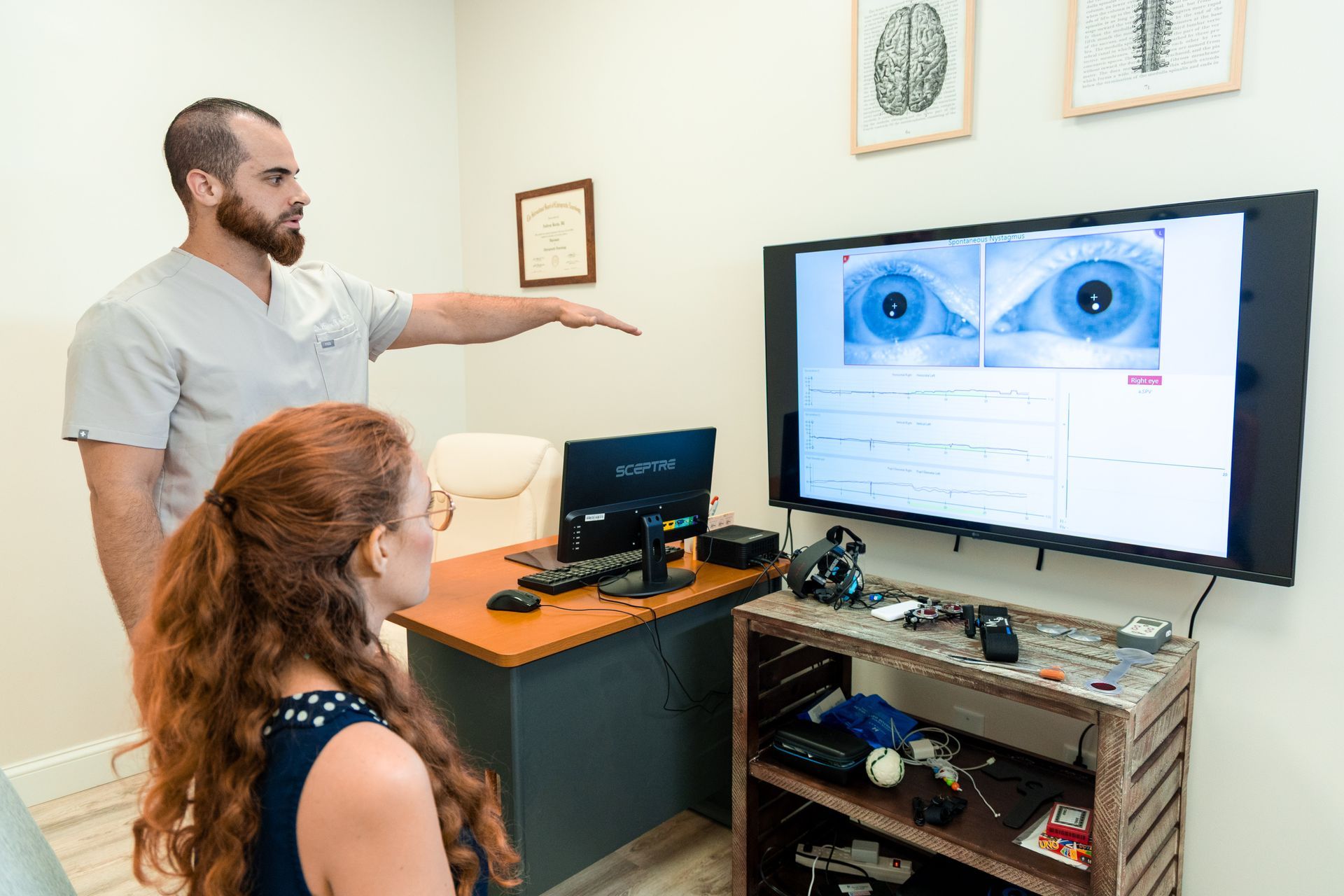
Two people reviewing an eye exam on a large monitor in a clinic office
By CT Brain & Junction May 12, 2026
The Connection Between Vision and Balance

Woman using a laptop in bed, leaning forward with a focused expression in a softly lit bedroom
By CT Junction Brain & Spine May 12, 2026
Do screens worsen your concussion symptoms? Learn how eye strain, visual processing, and neurological stress impact recovery—and how rehab can help.

Person with head down on open books, surrounded by doodled scribbles, at a desk
By CT Junction Brain & Spine May 12, 2026
Struggling with brain fog after a concussion? Learn what causes it, why it happens, and how neurological rehab helps restore focus, clarity, and cognitive function.

A person in a blue shirt opening a glass door at the CT Junction clinic under the text
By CT Junction Brain & Spine March 24, 2026
Learn what happens during a concussion evaluation at CT Junction Brain & Spine, including testing, diagnosis, and next steps for safe recovery.
A person fills out paperwork at a front desk in a clinic, with the text
By CT Junction Brain & Spine March 24, 2026
Discover how long concussion recovery usually takes, what affects healing time, and how CT Junction Brain & Spine supports a safe, full recovery.
A chiropractor adjusts a patient's back on a treatment table, with the text
By CT Junction Brain & Spine March 24, 2026
Understand the difference between a concussion and a headache or dizziness, including key symptoms, warning signs, and when to seek expert care.
A healthcare professional gestures toward a screen displaying
By CT Junction Brain & Spine March 13, 2026
Learn what to do immediately after a concussion or head injury, when to seek emergency care, and when to see a concussion specialist.
Show More