
How Long Does Concussion Recovery Usually Take?

CT Junction Brain & Spine • March 24, 2026

How Long Does Concussion Recovery Usually Take?

One of the most common questions after a head injury is, “How long will this take to heal?” The answer depends on the person, the timing of care, and what systems were affected by the injury. This blog explains general concussion recovery timelines and why some patients recover quickly while others need more support at CT Junction Brain & Spine.

Recovery Time Can Vary From Person to Person

There is no one-size-fits-all concussion recovery timeline. Some people improve within days or weeks, while others continue having symptoms for months.


Some timeline for people to recover include:

  • about 1 week for some athletes
  • about 2 weeks for many adults
  • up to 30 days for some children


These are general patterns, not guarantees. Recovery can be shorter or longer depending on the person and how quickly the right care begins.

Early Care Often Matters

One of the biggest recovery factors is how soon the patient gets evaluated and starts the right treatment approach.


When a concussion is addressed early, the brain and body may respond more efficiently. When symptoms are left alone for weeks or months, the nervous system may adapt to dysfunctional patterns, making recovery more complicated.


That does not mean long-term cases cannot improve. It means they may need a more structured and consistent plan.

Delayed Recovery Can Happen for Several Reasons

Some people do not bounce back on their own. Persistent symptoms may continue because of:


  • untreated neck dysfunction
  • vestibular issues
  • eye tracking problems
  • autonomic dysregulation
  • sensory overload
  • incomplete diagnosis
  • trying to push through symptoms too aggressively


A person may think they just need more rest, when the real issue is that one or more systems are stuck in an unhealthy pattern.

The Right Plan Is More Important Than Guessing

Recovery is not just about waiting. It is about understanding what is wrong and addressing it with a targeted approach.


At CT Junction Brain & Spine, patients undergo a detailed evaluation to help determine which domains are involved. From there, treatment is based on findings rather than guesswork. That can be especially valuable for patients who feel stuck, have been told to just wait it out, or have already tried multiple providers without getting clear answers.

frequently asked questions

  • How long does it usually take to recover from a concussion?

    Some people recover within 1 to 2 weeks, while others may need several weeks or longer depending on the case.

  • Does early treatment help concussion recovery?

    Yes. Early evaluation and targeted treatment may improve the recovery process.

  • Why do some concussions last for months?

    Persistent symptoms may happen when the underlying issues are not fully identified or treated.

  • Can old concussions still be treated?

    Yes. Even if symptoms have lasted for months, a structured evaluation may still help identify treatable problems.

  • Is rest alone enough for concussion recovery?

    Not always. Some patients need more than rest, especially if balance, vision, neck, or neurological systems are involved.

A person in a blue shirt opening a glass door at the CT Junction clinic under the text
By CT Junction Brain & Spine March 24, 2026
Learn what happens during a concussion evaluation at CT Junction Brain & Spine, including testing, diagnosis, and next steps for safe recovery.
A chiropractor adjusts a patient's back on a treatment table, with the text
By CT Junction Brain & Spine March 24, 2026
Understand the difference between a concussion and a headache or dizziness, including key symptoms, warning signs, and when to seek expert care.
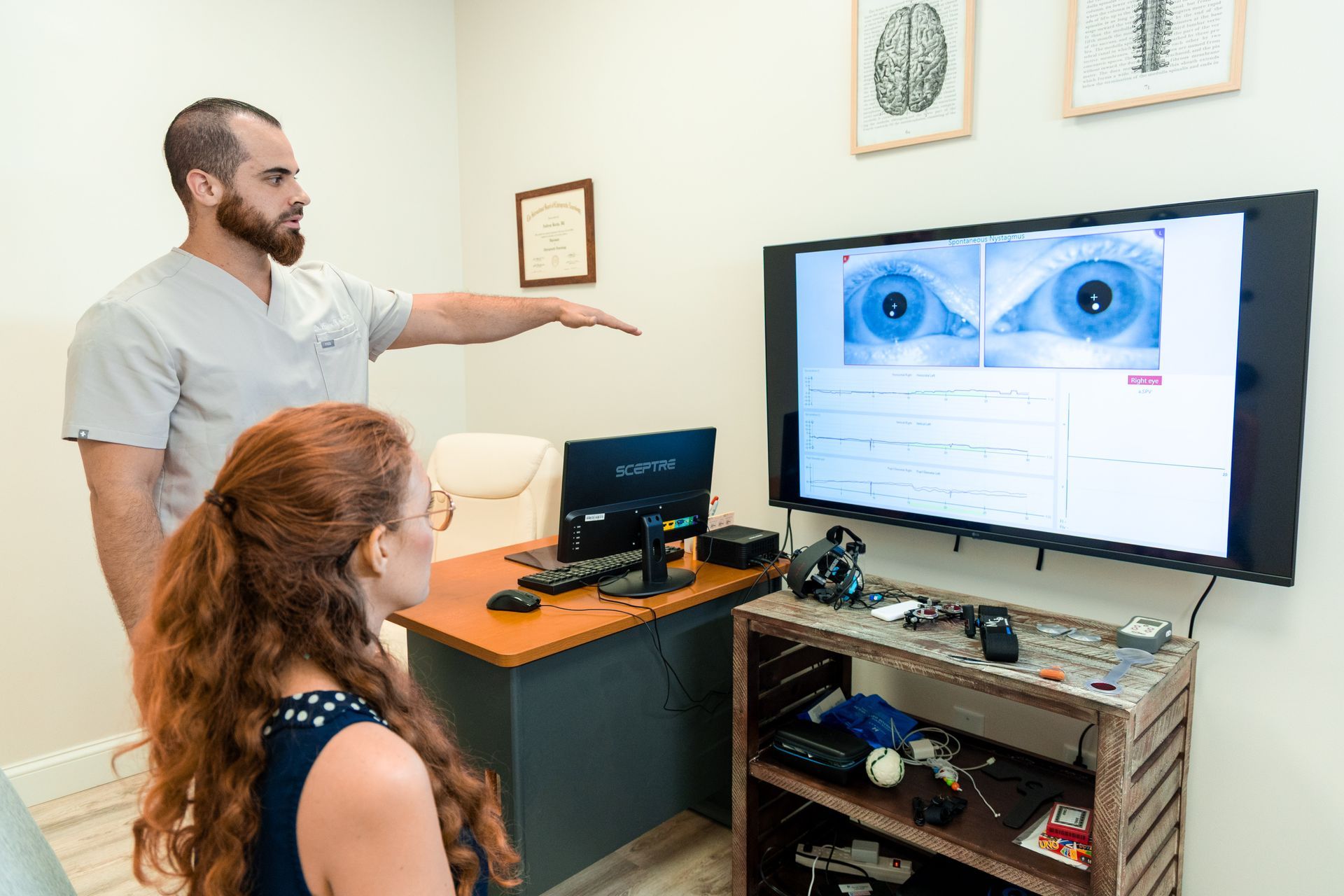
A healthcare professional gestures toward a screen displaying
By CT Junction Brain & Spine March 13, 2026
Learn what to do immediately after a concussion or head injury, when to seek emergency care, and when to see a concussion specialist.
A healthcare professional examines a patient's neck, with text overlay:
By CT Junction Brain & Spine March 13, 2026
Neck injuries and concussions often happen together after falls, sports injuries, and car accidents. Learn how whiplash and concussion symptoms can overlap.
Two clinicians in a medical setting review a brain scan on a monitor next to the text
By CT Junction Brain & Spine March 13, 2026
Learn the most common concussion symptoms after a head injury, including headache, dizziness, brain fog, light sensitivity, and neck pain.
A medical professional speaks to a patient in an office with the text overlay
By CT Junction Brain & Spine March 11, 2026
Dizziness after a concussion may involve the brain, eyes, inner ear, or neck. Learn why balance problems happen and how CT Junction evaluates the cause.
A professional in scrubs shakes hands with a person in a clinic office. The text asks: Can chiropractic care help recovery?
By CT Junction Brain & Spine March 11, 2026
Learn how chiropractic care may support concussion recovery by addressing neck pain, whiplash, headaches, and related symptoms.
Dave, a patient, giving a testimonial. He is wearing glasses and a blue shirt, with a dark blue backdrop.
By CT Junction Brain & Spine February 20, 2026
Discover how chiropractic care can relieve nerve, spine, shoulder, and hand pain. Restore mobility, reduce discomfort, and improve daily function.
Amy, a patient, smiles in a testimonial video for CT Junction Brain Clinic. Blue background.
By CT Junction Brain & Spine February 20, 2026
Experience personalized chiropractic care at CT Junction Brain & Spine. Relieve lower back pain, improve mobility, and restore daily comfort with Dr. Rosha.
Man in a white shirt, smiling, in front of a blue sign for
By CT Junction Brain & Spine February 20, 2026
Relieve gym-related neck pain with gentle chiropractic care, cupping therapy, and e-stim at CT Junction Brain and Spine. Restore mobility, and recover faster.