
Why Do Concussion Symptoms Come and Go Instead of Staying Consistent?
Understanding Fluctuating Concussion Symptoms
One of the most frustrating parts of dealing with a concussion is how inconsistent the symptoms can feel. You might go hours feeling relatively normal, only to suddenly experience dizziness, brain fog, or lightheadedness without warning.
This pattern is very common in concussion recovery. Symptoms often fluctuate because they are tied to how the brain responds to different levels of activity, stimulation, and stress throughout the day.
Why Symptoms Are Trigger-Based, Not Constant
After a concussion, certain areas of the brain may not be functioning efficiently. To compensate, other systems begin working harder to maintain normal function. While this allows you to continue your daily routine, it also creates a situation where symptoms are more likely to appear when the brain is placed under additional demand.
For some people, symptoms are triggered by movement—such as getting out of bed or turning quickly. For others, symptoms show up during more complex activities like walking through a busy environment or focusing for extended periods.
This is why symptoms can feel unpredictable. They are often tied to specific triggers rather than being present at all times.
The Role of Sensory Overload in Concussion Symptoms
Another major factor is how the brain processes sensory information after an injury. The brain normally filters out unnecessary input, allowing you to move through environments without feeling overwhelmed. After a concussion, that filtering ability can become less efficient.
When too much information is processed at once, the brain can become overstimulated. This can lead to symptoms such as dizziness, nausea, or difficulty concentrating—especially in visually or physically demanding situations.
How Neurological Rehab Helps Stabilize Symptoms
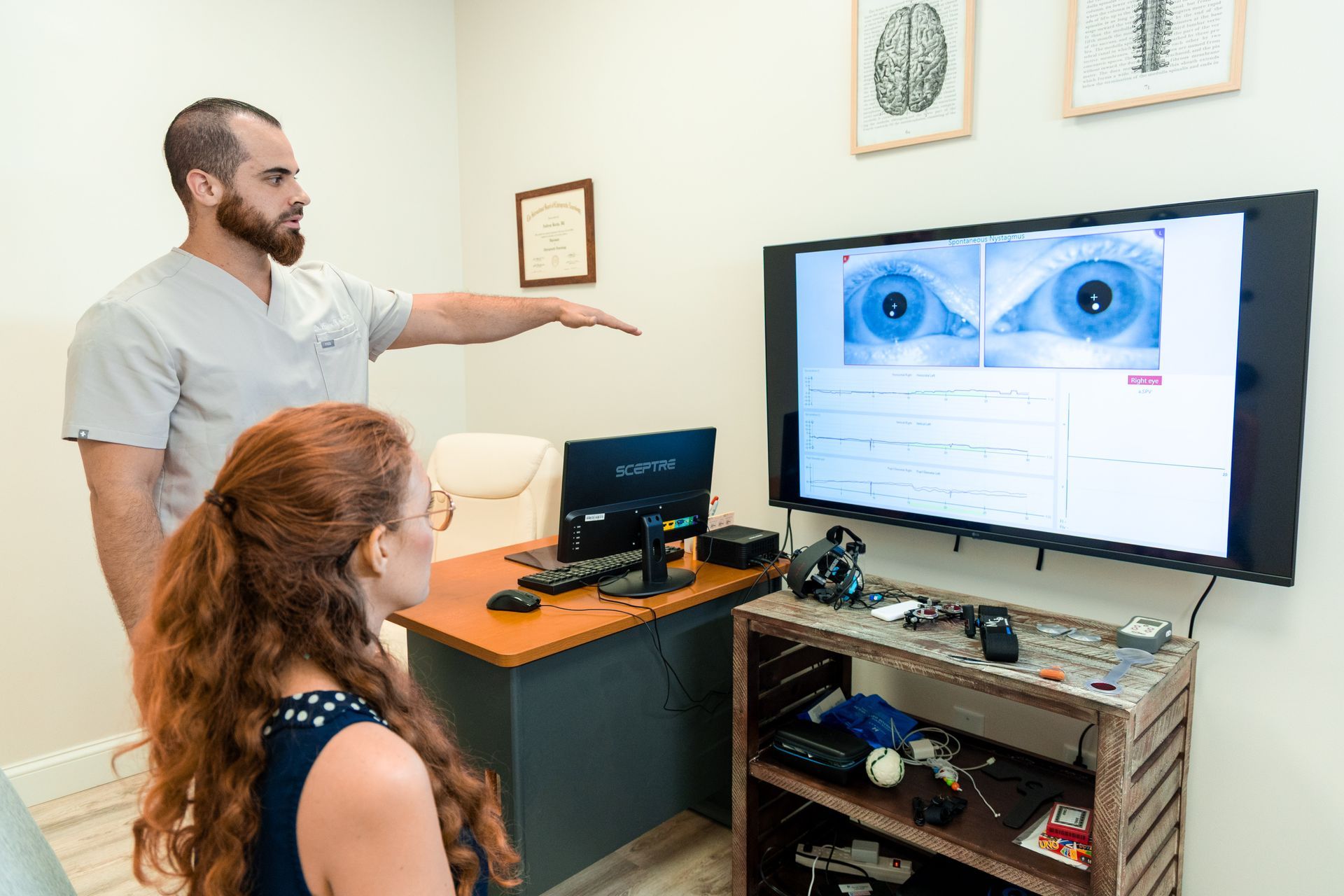
At CT Junction Brain & Spine, identifying symptom triggers is a key part of the evaluation process. Instead of only focusing on the symptoms themselves, the goal is to understand which systems are being overworked and why.
Through neurological rehab, vestibular therapy, and visual training, treatment is designed to reduce these triggers and improve how the brain processes information. As those systems become more efficient, symptoms tend to become less frequent and more manageable.
frequently asked questions
Why do concussion symptoms feel random throughout the day?
Concussion symptoms often feel unpredictable because they are tied to how your brain responds to different levels of activity and stimulation. Rather than being constant, symptoms are typically triggered by specific actions like movement, focusing, or exposure to busy environments.
Is it normal for symptoms to improve and then return?
Yes, this is very common. Improvement often happens during low-demand periods, while symptoms can return when the brain is placed under stress or increased activity.
What activities trigger concussion symptoms?
Common triggers include quick movements, prolonged concentration, screen use, and environments with heavy visual stimulation.
Do fluctuating symptoms mean something is wrong?
Not necessarily. Fluctuation is a normal part of recovery, but persistent symptoms may require targeted neurological treatment.
How can treatment help?
Treatment identifies the root cause of symptoms and uses targeted rehab to improve how the brain processes movement, balance, and visual input.