
Why Do Screens Make Concussion Symptoms Worse?

CT Junction Brain & Spine • May 12, 2026

Why Screen Time Feels More Difficult After a Concussion

For many individuals recovering from a concussion, screen use becomes noticeably more difficult. Activities like scrolling on a phone, working on a computer, or even watching television can quickly lead to symptoms such as headaches, eye strain, and mental fatigue.


What makes this especially frustrating is how quickly these symptoms can appear. Tasks that once felt effortless may now feel draining within minutes. This change is directly related to how the visual and neurological systems function after a concussion.

The Connection Between Vision and Brain Function

Using a screen is not just a visual task—it requires constant coordination between the eyes and the brain. Every time you look at a screen, your eyes are responsible for tracking movement, adjusting focus, and maintaining clarity, while your brain processes and interprets the information.


After a concussion, this coordination becomes less efficient. The systems are still working, but they require more effort to perform the same tasks. As a result, activities that involve sustained visual attention begin to feel more demanding.

Eye Tracking and Focusing Challenges

Two of the most commonly affected functions after a concussion are eye tracking and convergence.


Tracking refers to how smoothly your eyes follow movement, such as scrolling text or shifting images. Convergence refers to how well your eyes work together when focusing on something up close, like a phone or computer screen.


When these functions are impaired, the eyes struggle to keep up with the demands of screen use. This can lead to:


  • Eye strain after short periods of use


  • Headaches while reading or scrolling


  • Difficulty maintaining focus on text


  • Words appearing blurry or harder to follow


These issues are often subtle at first but become more noticeable with continued use.

The Role of Cognitive and Visual Fatigue

Screens place a combined demand on both the visual system and the brain. In addition to tracking and focusing, the brain must process text, images, and motion at the same time.


After a concussion, this added workload can lead to cognitive fatigue. Many patients describe this as brain fog, slower thinking, or difficulty concentrating. Tasks like responding to emails, reading articles, or working on a computer can feel more exhausting than expected.


This fatigue is not just mental—it is closely tied to how efficiently the brain is processing visual information.

Visual Overstimulation and Light Sensitivity

Screens also introduce elements such as brightness, contrast, and rapid changes in content. These factors increase the amount of stimulation the brain must process.


For individuals with light sensitivity or visual processing challenges, this can intensify symptoms. The brain is required to continuously adjust to changing input, which increases strain over time.


This is similar to what happens in busy environments, where too much sensory input leads to overload. With screens, the effect is more concentrated and sustained.

Why Symptoms Can Build Over Time

One important aspect of screen-related symptoms is that they often build gradually. You may feel fine at first, but as visual and cognitive demand continues, symptoms begin to develop.


This delayed response can make it difficult to recognize screens as the trigger. However, the longer the activity continues, the more strain is placed on the system.


Taking breaks may temporarily reduce symptoms, but the underlying issue remains if the visual system is not functioning efficiently.

Why Limiting Screen Time Isn’t the Long-Term Solution

Reducing screen time can help manage symptoms in the short term, especially early in recovery. However, avoiding screens entirely does not address the underlying dysfunction.


Long-term improvement depends on restoring how the visual and neurological systems work together. Without this, tolerance to screens may remain limited.


The goal is not just to avoid symptoms, but to improve the systems responsible for them.

Improving Screen Tolerance Through Neurological Rehab

At CT Junction Brain & Spine, treatment focuses on improving eye coordination, focusing ability, and visual processing through targeted neurological rehab.


This may include exercises designed to:


  • Improve eye tracking


  • Strengthen convergence


  • Enhance coordination between the eyes and brain


  • Reduce visual and cognitive fatigue


As these systems improve, patients often notice:


  • Increased tolerance to screens


  • Reduced eye strain and headaches


  • Better focus and clarity


  • Less mental fatigue during daily tasks


Over time, this allows for a gradual return to normal activities, including work, school, and screen use.

frequently asked questions

  • Why do screens trigger symptoms so quickly after a concussion?

    Screens require constant eye movement, focusing, and processing. When these systems are not functioning efficiently, they fatigue more quickly, leading to symptoms such as headaches and eye strain.

  • Is it normal to feel eye strain after just a few minutes of screen time?

    Yes, especially in the early stages of recovery. Impaired eye coordination and focusing ability can make even short periods of screen use feel demanding.

  • Are screens slowing down my concussion recovery?

    Screens can aggravate symptoms if overused, but recovery depends more on improving underlying function. Managing usage while addressing visual and neurological issues is key.

  • What specific problems make screens difficult after a concussion?

    Common issues include difficulty tracking movement, trouble focusing on close objects, and reduced ability to process visual information efficiently.

  • How can I improve my tolerance to screens?

    Improving tolerance typically involves targeted visual and neurological rehab. As eye coordination and processing improve, most patients are able to gradually increase screen use without triggering symptoms.

Woman holding her head with eyes closed, showing pain or stress against a gray background
By CT Junction Brain & Spine May 12, 2026
Understanding Overstimulation After a Concussion

Man holding his temples with eyes shut, grimacing outdoors on a sunny day
By CT Junction Brain & Spine May 12, 2026
Learn why concussion symptoms come and go instead of staying consistent. Discover common triggers, sensory overload, and how neurological rehab can help stabilize recovery.

Hands cradling a pregnant belly, with a blue shirt and wristwatch visible
By CT Junction Brain & Spine May 12, 2026
Struggling in crowds after a concussion? Learn why busy environments trigger dizziness and how vestibular and neurological rehab can help improve sensory processing.
Man reaching up to adjust a round wall fixture on a white wall with other fixtures and black markers
By CT Junction Brain & Spine May 12, 2026
Learn how neurological rehabilitation differs from physical therapy and why it’s essential for effective concussion recovery.
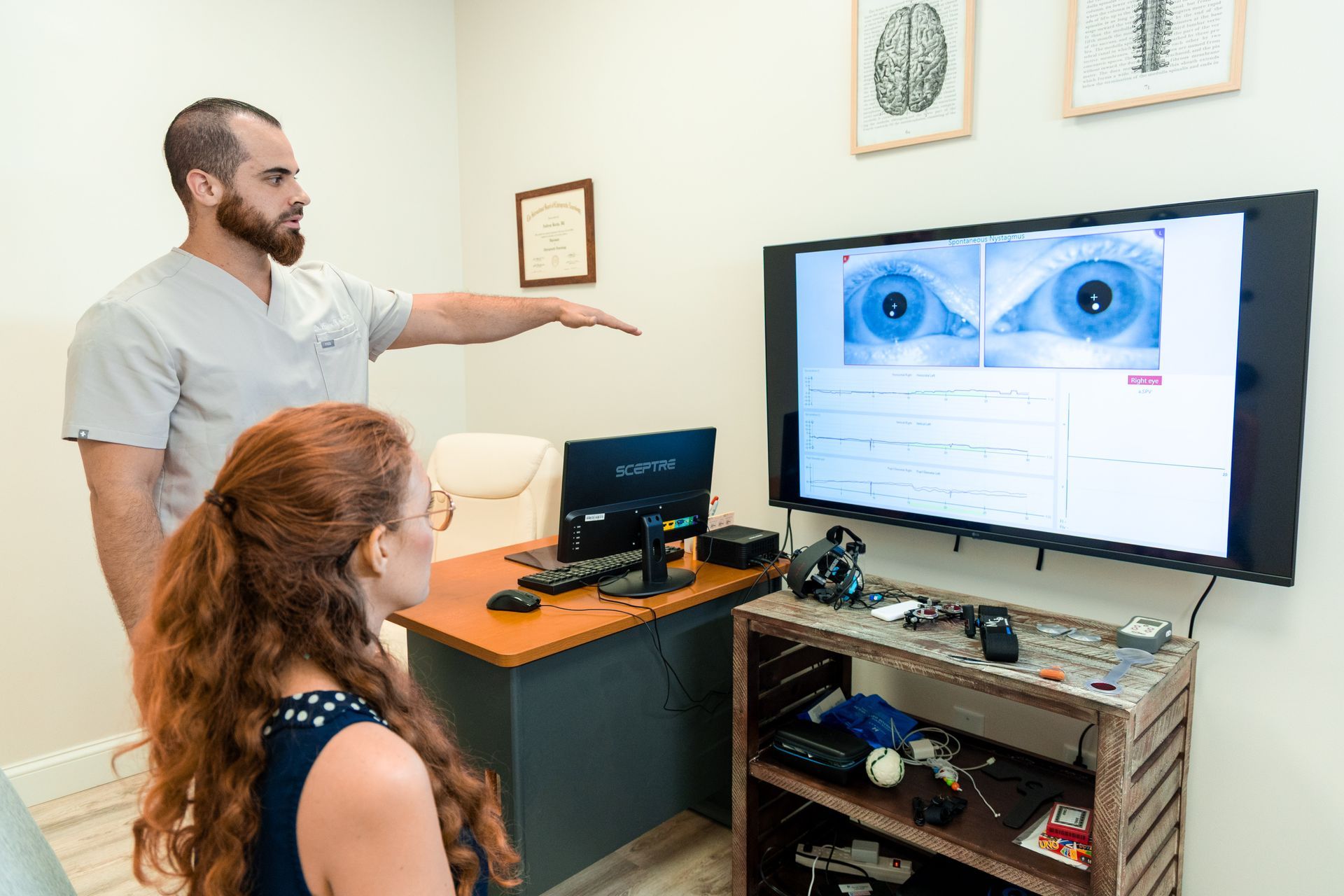
Two people reviewing an eye exam on a large monitor in a clinic office
By CT Brain & Junction May 12, 2026
The Connection Between Vision and Balance

Person with head down on open books, surrounded by doodled scribbles, at a desk
By CT Junction Brain & Spine May 12, 2026
Struggling with brain fog after a concussion? Learn what causes it, why it happens, and how neurological rehab helps restore focus, clarity, and cognitive function.

A person in a blue shirt opening a glass door at the CT Junction clinic under the text
By CT Junction Brain & Spine March 24, 2026
Learn what happens during a concussion evaluation at CT Junction Brain & Spine, including testing, diagnosis, and next steps for safe recovery.
A person fills out paperwork at a front desk in a clinic, with the text
By CT Junction Brain & Spine March 24, 2026
Discover how long concussion recovery usually takes, what affects healing time, and how CT Junction Brain & Spine supports a safe, full recovery.
A chiropractor adjusts a patient's back on a treatment table, with the text
By CT Junction Brain & Spine March 24, 2026
Understand the difference between a concussion and a headache or dizziness, including key symptoms, warning signs, and when to seek expert care.
A healthcare professional gestures toward a screen displaying
By CT Junction Brain & Spine March 13, 2026
Learn what to do immediately after a concussion or head injury, when to seek emergency care, and when to see a concussion specialist.
Show More