
Can Chiropractic Care Help With Concussion Recovery?

CT Junction Brain & Spine • March 11, 2026

Many patients wonder whether chiropractic care has a role in concussion recovery. The answer depends on the person, the injury, and what systems are involved. This blog explains how chiropractic care may fit into a broader concussion treatment plan and why CT Junction Brain & Spine takes a more comprehensive approach than a one-size-fits-all model.

Concussion Recovery Is Not Always Just About Waiting

Some people recover naturally with time. Others do not. When symptoms linger, it is often because something more specific is going on beneath the surface.


A patient may still have:


  • neck dysfunction
  • dizziness
  • visual strain
  • balance problems
  • headaches
  • motion sensitivity
  • nervous system dysregulation


In those cases, simply “walking it off” may not be enough.

Chiropractic Care May Help Address the Physical Component

Chiropractic care may play a role when the injury includes cervical involvement, whiplash, joint restriction, muscle tension, or headache patterns related to the neck.


That can matter because the neck can influence:


  • headache frequency
  • dizziness
  • posture
  • movement tolerance
  • symptom triggers


For some patients, improving cervical function is an important piece of overall concussion recovery.

The Best Approach Is Comprehensive, Not Isolated

One of the strongest themes from the meeting was that many patients get bounced between siloed providers. One office checks the inner ear. Another looks at the eyes. Another addresses balance. Another handles the neck.


At CT Junction Brain & Spine, the goal is to evaluate multiple systems under one roof. That means chiropractic care is not presented as the only answer. Instead, it can be one part of a larger, research-driven plan that may also include neurological rehab, vestibular rehab, eye training therapy, and objective reassessment.

Patients Want Answers and a Plan

Many people are not just looking for symptom relief. They are looking for clarity.


At CT Junction Brain & Spine, patients can expect a detailed evaluation, a better understanding of what is wrong, and a treatment strategy based on what testing shows. That combination of comprehensive assessment and targeted care is a big reason why patients often feel more hopeful after getting the right evaluation.

frequently asked questions

  • Can chiropractic care help after a concussion?

    It may help in cases where neck dysfunction, whiplash, or cervical issues are contributing to symptoms.

  • Is chiropractic care the only treatment for concussion?

    No. Concussion recovery often requires a broader approach depending on the systems involved.

  • Why is the neck important in concussion recovery?

    The neck can contribute to headaches, dizziness, and movement-related symptoms after injury.

  • What makes CT Junction’s approach different?

    They assess multiple systems, including neurological, visual, vestibular, and cervical factors, rather than focusing on only one.

  • Should I just wait and see if symptoms go away?

    Some people recover on their own, but persistent symptoms should be evaluated so the real cause is not missed.

Woman holding her head with eyes closed, showing pain or stress against a gray background
By CT Junction Brain & Spine May 12, 2026
Understanding Overstimulation After a Concussion

Man holding his temples with eyes shut, grimacing outdoors on a sunny day
By CT Junction Brain & Spine May 12, 2026
Learn why concussion symptoms come and go instead of staying consistent. Discover common triggers, sensory overload, and how neurological rehab can help stabilize recovery.
Hands cradling a pregnant belly, with a blue shirt and wristwatch visible
By CT Junction Brain & Spine May 12, 2026
Struggling in crowds after a concussion? Learn why busy environments trigger dizziness and how vestibular and neurological rehab can help improve sensory processing.

Man reaching up to adjust a round wall fixture on a white wall with other fixtures and black markers
By CT Junction Brain & Spine May 12, 2026
Learn how neurological rehabilitation differs from physical therapy and why it’s essential for effective concussion recovery.
Two people reviewing an eye exam on a large monitor in a clinic office
By CT Brain & Junction May 12, 2026
The Connection Between Vision and Balance

Woman using a laptop in bed, leaning forward with a focused expression in a softly lit bedroom
By CT Junction Brain & Spine May 12, 2026
Do screens worsen your concussion symptoms? Learn how eye strain, visual processing, and neurological stress impact recovery—and how rehab can help.

Person with head down on open books, surrounded by doodled scribbles, at a desk
By CT Junction Brain & Spine May 12, 2026
Struggling with brain fog after a concussion? Learn what causes it, why it happens, and how neurological rehab helps restore focus, clarity, and cognitive function.

A person in a blue shirt opening a glass door at the CT Junction clinic under the text
By CT Junction Brain & Spine March 24, 2026
Learn what happens during a concussion evaluation at CT Junction Brain & Spine, including testing, diagnosis, and next steps for safe recovery.
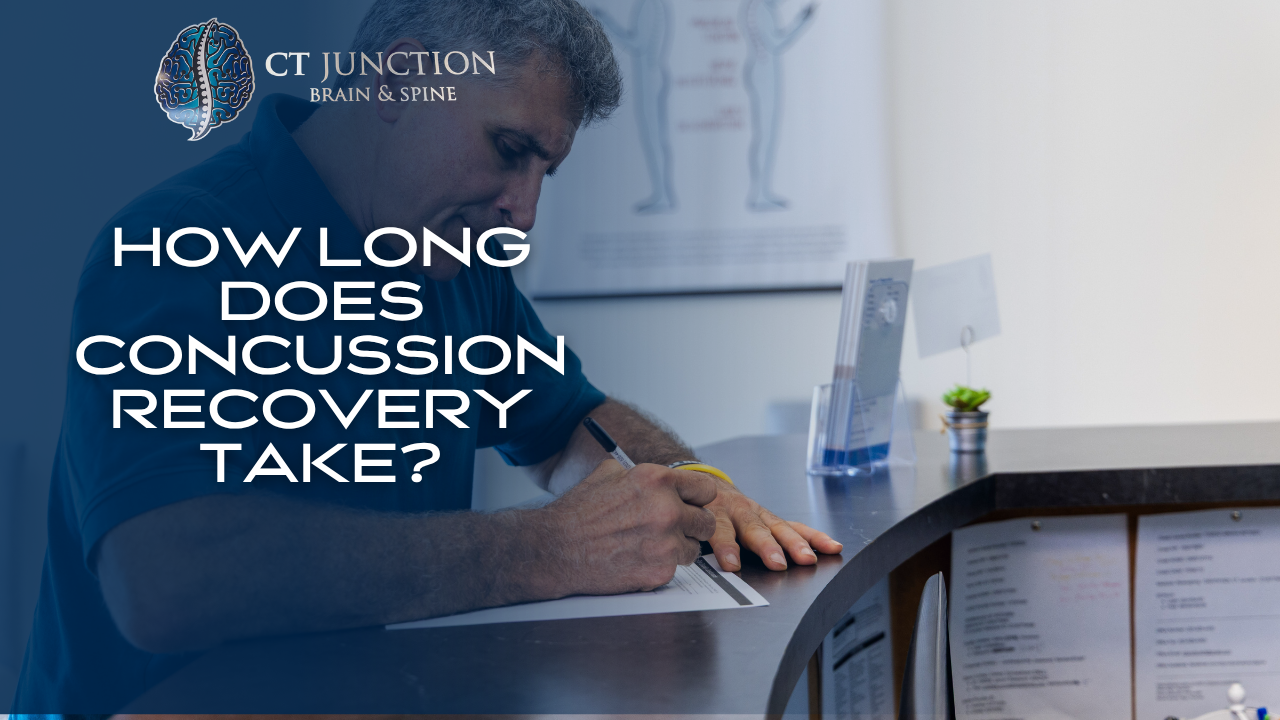
A person fills out paperwork at a front desk in a clinic, with the text
By CT Junction Brain & Spine March 24, 2026
Discover how long concussion recovery usually takes, what affects healing time, and how CT Junction Brain & Spine supports a safe, full recovery.
A chiropractor adjusts a patient's back on a treatment table, with the text
By CT Junction Brain & Spine March 24, 2026
Understand the difference between a concussion and a headache or dizziness, including key symptoms, warning signs, and when to seek expert care.
Show More