

What Causes Dizziness or Balance Problems After a Concussion?
Dizziness is one of the most common and most frustrating symptoms after a concussion. It can make people feel unsteady, disoriented, motion sensitive, or simply “not right.” This blog explains why dizziness happens after concussion and how the brain, eyes, inner ear, and neck all play a role in balance and recovery at CT Junction Brain & Spine.
Balance Depends on Multiple Systems Working Together
The body relies on several systems to maintain balance and spatial awareness, including:
- the brain
- the eyes
- the inner ear
- the neck
Each system sends information to the brain. When those messages match, movement feels stable and normal. When they do not match, the brain may interpret that as dizziness, imbalance, or motion sensitivity.
A Concussion Can Create a Sensory Mismatch
One of the simplest ways to explain post-concussion dizziness is sensory mismatch. For example:
- the eyes may say one thing
- the inner ear may say another
- the neck may send a third signal
When these inputs do not line up, the brain struggles to process movement correctly. That mismatch can make a person feel dizzy, off-balance, nauseated, or overwhelmed in motion-heavy environments.
Dizziness Does Not Always Mean the Same Thing
“Dizziness” is a broad word. One patient may mean spinning. Another may mean floating. Another may mean lightheadedness. Another may mean they feel unstable in crowds, stores, or while turning their head.
That is why dizziness should not be treated as one simple symptom with one simple cause. It can be driven by:
- vestibular dysfunction
- eye tracking issues
- neck dysfunction
- neurological processing problems
- mixed-system overload
Testing Helps Identify Where the Problem Is Coming From
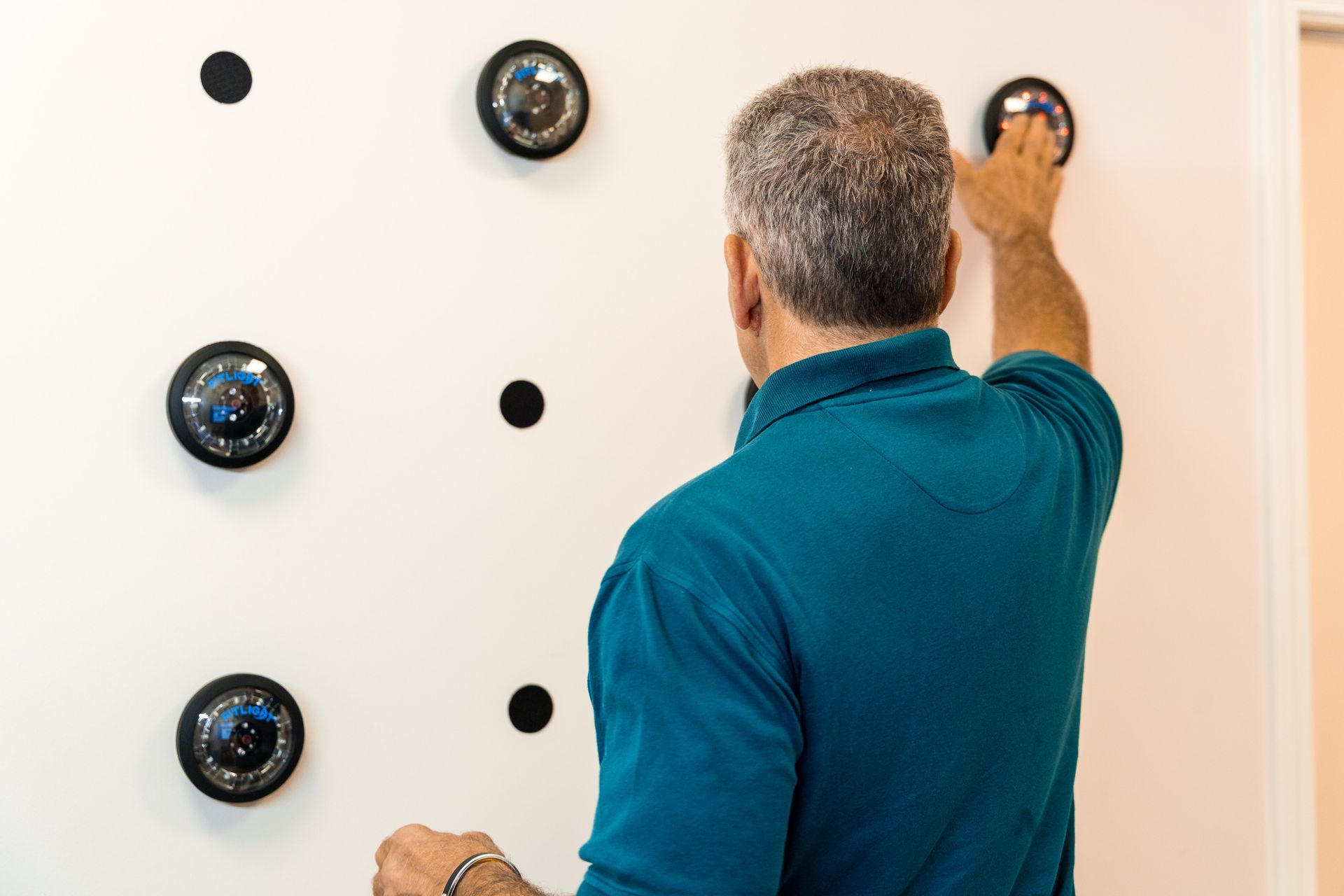
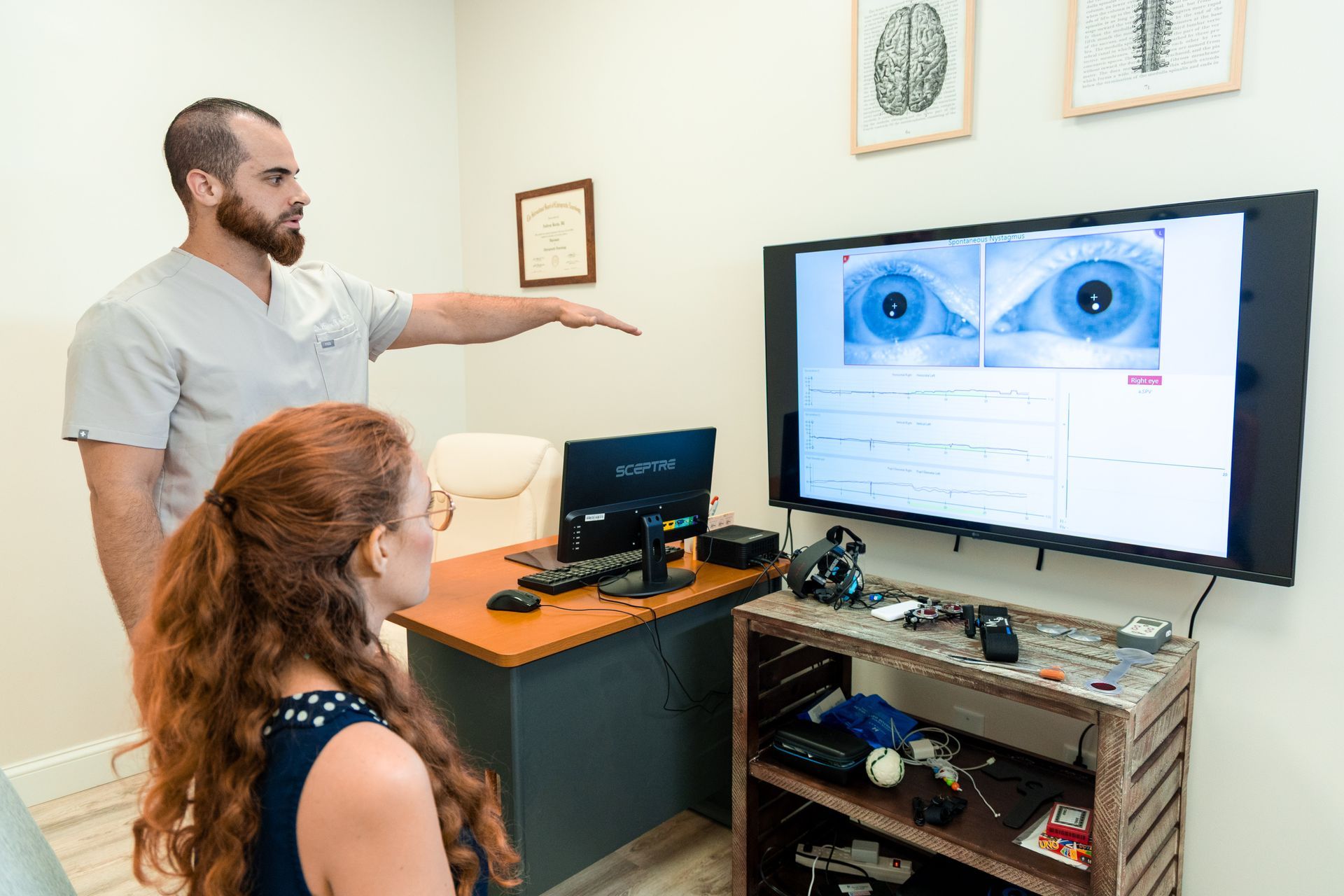
Because dizziness can come from multiple systems, targeted testing matters. At CT Junction Brain & Spine, a detailed evaluation can help determine whether the problem is primarily visual, vestibular, cervical, neurological, or a combination.
That matters for treatment, because the right rehab approach depends on what is actually causing the dizziness. A person who feels stuck or keeps being told “everything looks normal” may still have a very real functional issue that needs the right kind of care.
frequently asked questions
Why do I feel dizzy after a concussion?
Dizziness often happens because the brain is receiving mismatched information from the eyes, inner ear, neck, and nervous system.
Can neck problems cause dizziness too?
Yes. Neck dysfunction can contribute to dizziness, especially after whiplash.
Is vertigo the same as post-concussion dizziness?
Not always. Vertigo is one type of dizziness, but post-concussion dizziness can feel different depending on the cause.
Can eye problems cause balance issues after a concussion?
Yes. Eye tracking and visual processing problems can affect balance and motion tolerance.
How do you treat dizziness after a concussion?
Treatment depends on the source, which is why a full evaluation is important before starting care.